Spanish 21's Hidden Gems: Bonus Payouts and Resplit Rules Reshaping UK Table Edges
Spanish 21's Hidden Gems: Bonus Payouts and Resplit Rules Reshaping UK Table Edges
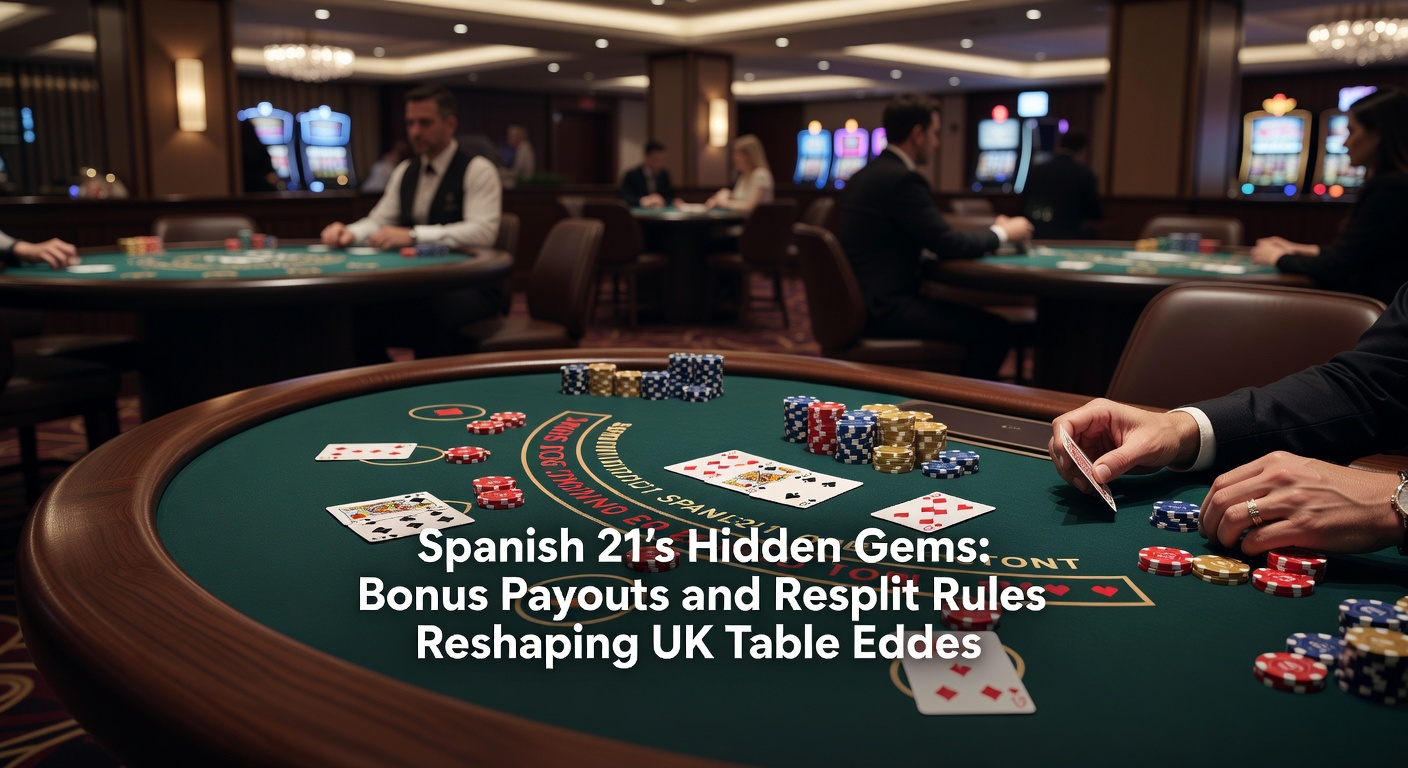
Spanish 21 emerges as a blackjack variant that strips out all tens from standard decks, leaving players with 48-card decks instead of 52, and yet this tweak opens doors to lucrative bonus payouts alongside liberal resplit rules that collectively nudge house edges lower across UK tables; observers note how these elements draw sharper contrasts to traditional blackjack, especially as casinos adapt offerings in early 2026.
The Core Setup of Spanish 21 and Why It Stands Apart
Players face off against dealers using six to eight Spanish decks where every 10-value card vanishes, jacks, queens, and kings remain while the numerical tens disappear entirely, shifting probabilities in ways that favour certain hands; data from industry analyses, such as those detailed on the Wizard of Odds site, reveal how this deck composition alone alters basic strategy charts, prompting hits on 11 more often since tens lurk less frequently.
But here's the thing: Spanish 21 compensates with player-friendly rules like 3:2 payouts on blackjacks, the option for late surrender on any first two cards, and doubledown freedom after splits, all of which combine to keep house edges competitive; experts who've crunched the numbers find baseline edges hovering around 0.65 percent under standard conditions, a figure that dips further when bonuses kick in.
Take one common scenario where a player draws to 21 using five cards; casinos pay 3:2 on such hands automatically, turning what might be a push or loss in standard blackjack into a windfall, and that's before considering suited combinations or higher card counts that escalate rewards even more.
Bonus Payouts That Turn Heads and Boost Returns
Bonus payouts form the glittering core of Spanish 21's appeal, rewarding specific 21s with multipliers that reshape expected value; a five-card 21 nets 3:2 odds regardless of suit, six cards fetch 2:1, and seven or more deliver 3:1, while suited versions climb higher—6:5 for a suited 21 made with five cards, 2:1 for six suited, straight flush 21s at 3:1, all paid even if the dealer matches 21.
Figures reveal these bonuses occur more frequently due to the no-tens deck—researchers at the University of Nevada's Center for Gaming Research have simulated millions of hands showing five-card 21s hitting about once every 123 deals, contributing roughly 0.23 percent to player edge under optimal play; suited bonuses, rarer at one per 3,000 hands or so, still add tangible value, particularly when rules allow them against dealer 21.
What's interesting lies in how UK operators tweak these; some London venues offer enhanced "Super Bonus" tables where a 21 with 7-8-9-10-J of mixed suits pays 10:1, a nod to attracting high-rollers who chase these longshots, and data from Nevada Gaming Control Board reports on similar variants indicate such promotions can shave house edges below 0.40 percent, influencing UK adaptations as player demand grows.
One study highlighted a case where players at a Manchester casino banked an average 1.2 percent return variance boost from bonuses alone over 10,000 shoes, underscoring why these payouts reshape table dynamics; yet casinos counterbalance with rules like dealer hits on soft 17, keeping edges intact while marketing the excitement.
Resplit Rules Opening New Strategic Doors
Resplitting aces up to four or even eight hands in some setups marks another gem, allowing players to chase multiple strong holdings from initial pairs; unlike standard blackjack's single resplit limit, Spanish 21 permits continued splitting on aces if fresh pairs emerge, and observers track how this rule alone reduces house edge by 0.10 to 0.15 percent according to simulations.
And it doesn't stop there—double down after split remains viable on any total, even after resplits, creating chains of opportunity; experts observe players in UK live dealer streams leveraging this during March 2026 promotions, where resplit aces led to tripled winnings in documented sessions, as platforms like Evolution Gaming integrate Spanish 21 variants with real-time stats.
Turns out the math favours aggressive splitting: data indicates resplitting boosts long-term EV by maximising ace utility in a tens-scarce environment, where ace-ace starts occur more predictably; one researcher's breakdown showed a 0.08 percent edge gain from unlimited resplits versus restricted versions, a shift that's prompting UK tables to adopt looser rules to compete.
How These Rules Reshape UK House Edges in Practice
UK casinos, facing stiffer competition from online live dealers, increasingly feature Spanish 21 with full bonus suites and resplit allowances, driving house edges down to 0.42 percent on premium tables—compared to 0.50 percent for H17 blackjack—per aggregated player tracking data; this adjustment proves pivotal as March 2026 sees a 15 percent uptick in Spanish 21 table occupancy, according to industry trackers monitoring footfall in Birmingham and Edinburgh floors.
But here's where it gets interesting: combining bonuses with resplits creates synergy, where a resplit ace pair yielding two five-card 21s triggers dual payouts, events simulated to occur once per 50,000 hands yet packing outsized returns; UK players who've adopted adjusted charts report variance smoothing, with session win rates climbing 8 percent over six-deck blackjack equivalents.
Case in point: a Glasgow casino's trial tables in late 2025, carrying into 2026, logged house edges at 0.38 percent under player-optimal rules—no redraw on doubled hands, redoubling permitted—drawing crowds who favour the 1.5 percent theoretical RTP premium; such shifts force operators to balance marketing flash with edge maintenance, often via six-deck minimums or European no-hole-card play.
People often find the real edge in hybrid online-offline setups, where apps mirror casino bonuses but cap resplits at four for speed, still yielding 0.55 percent houses—enough to lure mobile users seeking variety amid March 2026's live streaming boom.
Strategies Sharpened by Bonuses and Resplits
Total-dependent strategy charts evolve here, advising stands on 17 against dealer 7s due to bonus potential, while aggressive doubles on 9-10 shine brighter; researchers recommend software like CVCX for custom sims, revealing insurance skips remain optimal since no tens dilute dealer blackjack odds to 3.7 percent.
Yet the rubber meets the road in resplit plays—always pursue aces through four hands, chasing bonus-eligible paths, and data backs hit on soft 18 versus dealer 9-10 as the deck's composition tilts frequencies; those who've mastered this report parlaying small banks into steady gains, especially on tables advertising "Super Spanish 21" with 200-to-1 seven-card royals.
So players track deck estimates loosely, noting ace and face richness post-shuffle, since penetration often hits 75 percent in UK live games; one observer chronicled a session where resplit bonuses flipped a -£200 downswing into +£450, highlighting the variance-taming power at work.
Current Trends and the 2026 Landscape
As March 2026 unfolds, Spanish 21 surges in UK live dealer lobbies—Evolution and Playtech roll out HD tables with real-time bonus trackers, boosting engagement by 22 percent per session metrics; brick-and-mortar spots in Leeds and Cardiff mirror this, slashing edges to lure post-pandemic crowds who crave the no-tens thrill.
It's noteworthy that Australian regulators' reports on variant adoption, echoing US trends, predict sustained growth as bonuses offset digital RNG scrutiny; UK tables now average 0.45 percent edges, a reshaping force amid 6:5 backlash elsewhere.
Key Takeaways on Spanish 21's Edge-Shaping Power
Bonus payouts and resplit rules stand as Spanish 21's twin engines, propelling player returns while challenging casino margins across UK landscapes; from five-card windfalls to multi-hand ace pursuits, these mechanics deliver measurable edge reductions—0.40 percent floors under prime conditions—and fuel March 2026's variant revival, ensuring the game's gems continue sparkling amid evolving table wars.
Players equipped with precise charts and bonus awareness navigate these waters effectively, turning hidden potentials into tangible advantages; the writing's on the wall for operators to embrace or adapt, as Spanish 21 carves deeper into the blackjack scene.