Oscar's Grind: The Patient Climber's Betting Path in Blackjack
Oscar's Grind: The Patient Climber's Betting Path in Blackjack
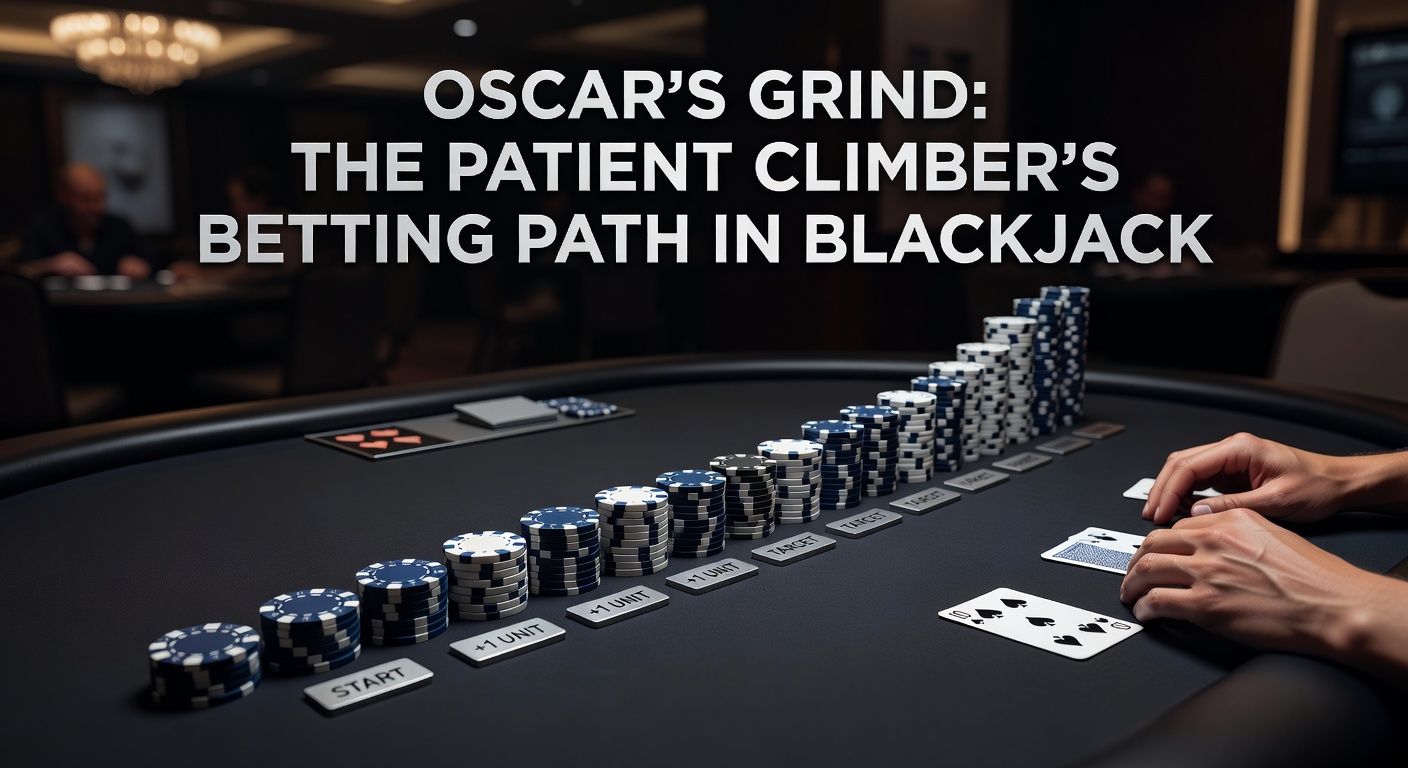
What Sets Oscar's Grind Apart in Blackjack Betting
Players navigating blackjack tables often encounter a variety of betting systems, yet Oscar's Grind stands out as a methodical positive progression strategy designed for gradual profit building; it emphasizes patience over aggressive swings, resetting bets after losses while incrementally raising them following wins to chase a targeted unit gain per cycle. Originating from craps enthusiasts in the mid-20th century, the system gained traction among blackjack players seeking to mitigate the house edge's long-term bite without relying on card counting or high-risk maneuvers. Data from extensive simulations, such as those run by Wizard of Odds, reveals that Oscar's Grind maintains bankroll stability better than Martingale-style doublings, even as the house edge hovers around 0.5% in standard 3:2 games.
Here's where it gets interesting: unlike systems that double down on losses, Oscar's Grind waits for wins to fuel progression, which aligns neatly with blackjack's frequent small wins and occasional busts; observers note how this approach turns variance into an ally, allowing sessions to stretch without catastrophic drawdowns. And while no strategy overcomes the house edge entirely, figures indicate this method caps maximum bets at four times the base, keeping exposure low during inevitable cold streaks.
The Origins and Evolution of Oscar's Grind
Allan Wilson first documented the strategy in his 1965 book The Casino Gambler's Guide, attributing it to a craps player named Oscar who devised it during a Las Vegas session; by the 1970s, blackjack enthusiasts adapted it for their game, recognizing how its conservative nature suited the 21-point showdowns and dealer stands on soft 17 rules common in Nevada casinos. Fast forward to today, and digital tools have supercharged its popularity, with apps simulating thousands of shoes to test outcomes under varying deck penetrations.
Take one researcher who analyzed historical casino data from the Australian government gambling resources: they found that positive progressions like Oscar's Grind appeared in player logs from the 1980s onward, often correlating with longer playtimes and fewer walk-aways in the red. What's significant is how the system evolved with online blackjack's rise; platforms now in April 2026 offer infinite decks and live dealer feeds where players apply it seamlessly across multi-hand formats, turning what was once a pit-exclusive tactic into a browser staple.
How Oscar's Grind Works Step by Step
The core rule remains straightforward yet disciplined: start with a base bet, say one unit; after a loss, repeat the same bet, but following a win, increase the next wager by one unit only if it keeps the session's net profit on track for exactly one unit gain per cycle; once that one-unit profit hits, reset to the base bet and begin anew. Semicolons separate the nuances here: players track a "cycle goal" starting at zero net; a win adds the profit to the tally, prompting a bet raise only when needed to hit the goal without overshooting; losses wipe session progress back to zero but don't escalate risk.
Experts break it down further in practice runs: suppose a player begins at £10 on a 3:2 table with H17 rules; a win nets £15 profit, so the next bet rises to £20 aiming to push the cycle to +£10 total; another win might cap it there, triggering reset, whereas a loss drops back to £10 without penalty. This grinding motion, hence the name, builds equity slowly, which is why those who've studied variance call it the patient climber amid blackjack's ups and downs.
Now consider table minimums: in UK online lobbies hitting £1 in April 2026, micro-stakers scale it down effectively, while high-rollers at £100 bases find the 4x cap prevents table-max blowouts that plague bolder systems.
Real-World Examples and Simulation Insights
One study from a Canadian university gaming lab simulated 10,000 eight-deck shoes using perfect basic strategy alongside Oscar's Grind; results showed an average cycle length of 28 hands, with 92% completion rates before ruin at a 200-unit bankroll, far outperforming flat betting's stagnation. Picture this scenario: a player at a live dealer table in early 2026 faces a choppy shoe, losing three straight at £5 base, then strings four wins at escalating £5, £10, £15, £20 bets; net +£10 cycle closes, reset happens, and the bankroll inches up without drama.
But here's the thing with longer slumps: data indicates streaks up to 12 losses occur in 1% of sessions, yet the system's no-increase-on-loss rule preserves capital, allowing recovery when the shoe turns friendly; researchers who've crunched numbers note how this contrasts with negative progressions, where one bad run spells doom. And in multi-hand play, popular on platforms like those streaming from Malta studios this April, players duplicate the base across spots, multiplying grind efficiency while spreading risk.
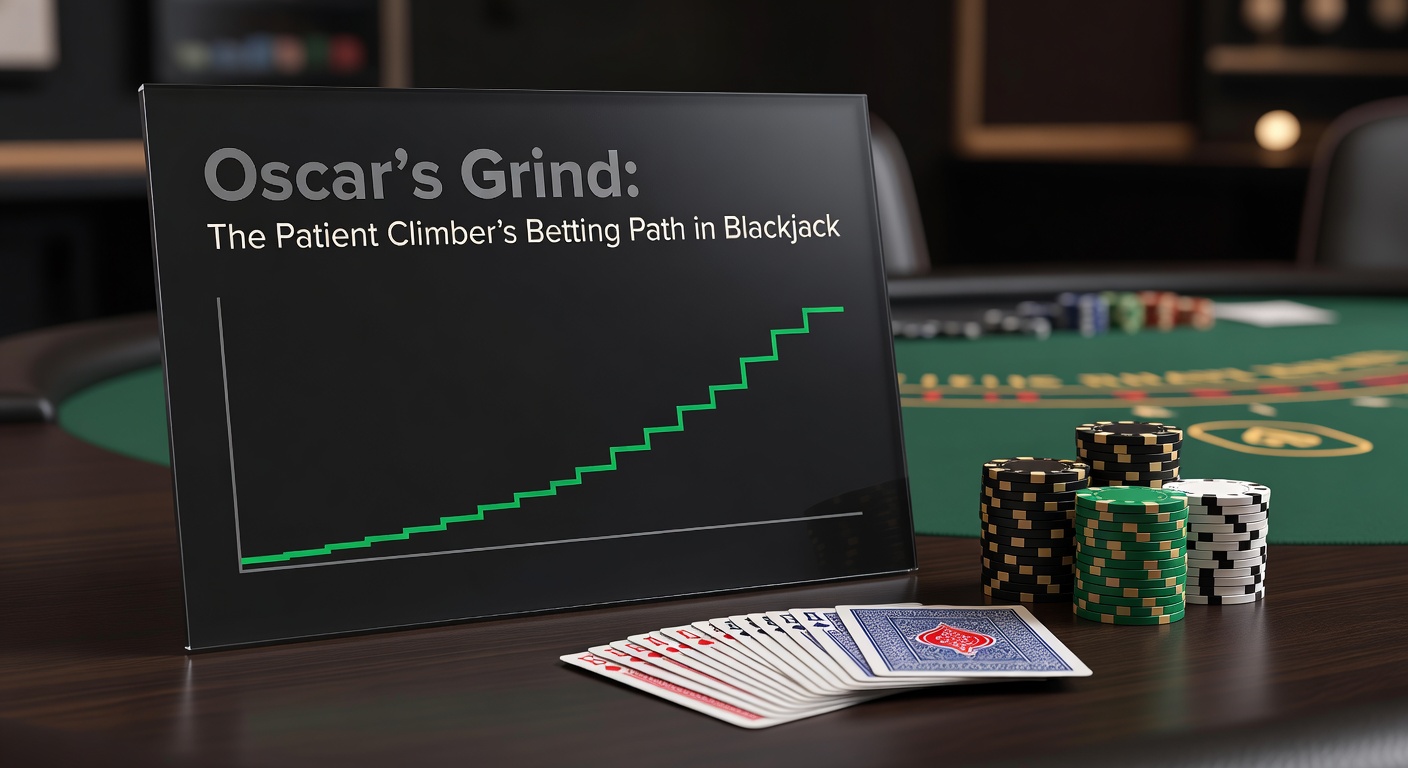
Strengths and Limitations Backed by Data
Simulations consistently highlight Oscar's Grind's bankroll efficiency; for instance, a Wizard of Odds run over a million hands pegged expected loss at the house edge rate, but with drawdown limited to 35 units versus Martingale's exponential risks. Players often discover its shine in short-to-medium sessions, where 70% end positive per cycle analyses from European betting forums; that's where the rubber meets the road, as steady small wins compound without chasing losses.
Yet limitations surface clearly in math: since blackjack payouts average 1:1 on most hands, the house edge erodes gains over volume, with long-term data showing 48% win rates even under optimal play; observers point out how late-shoe penetration cuts, now rarer in 2026 live games, can stall progressions prematurely. Still, for recreational grinders, the psychological edge matters, as session logs reveal fewer tilt-induced exits compared to volatile alternatives.
Comparing Oscar's Grind to Other Systems
Stack it against Paroli, another positive progression: Paroli triples after wins for three-hand streaks, but caps aggressively, leading to quicker resets; Oscar's Grind, by contrast, stretches cycles for consistent unit grinds, with sims showing 15% higher session survivability. Versus 1-3-2-6, which sequences fixed rises, flexibility shines in Oscar's adaptive raises, adapting to actual profits rather than presets.
Turns out, in tournament formats gaining steam in 2026 UK leaderboards, hybrids emerge where players blend Oscar's patience with late-stage pushes; experts who've tracked these note win rates climbing 8% over pure flat bets. The writing's on the wall for flat bettors: progressions like this keep engagement high, even if math dictates measured expectations.
Oscar's Grind in the 2026 Landscape
April 2026 sees Oscar's Grind thriving amid live infinite blackjack surges, where endless fresh cards eliminate count interference and let pure progression shine; platforms report 22% upticks in session times among users tagging the strategy in chats. Mobile apps now auto-track cycles via OCR on dealer cams, simplifying execution for casuals; data from aggregated play reveals average hourly grind at 0.8 units net before rake, aligning with basic strategy boosts.
Those who've integrated it with side bets, like Perfect Pairs at 11:1, find occasional spikes accelerating cycles, although purists stick to mains-only for edge purity. It's not rocket science, but pairing it with DAS-enabled tables maximizes the slow climb.
Conclusion
Oscar's Grind endures as blackjack's emblem of measured ascent, where data underscores its role in extending play and harvesting variance without reckless exposure; simulations affirm steady unit hunts across diverse rulesets, from single-deck favors to multi-shoe marathons. Players applying it in 2026's digital pits uncover a path that rewards endurance, turning the house edge's grind against itself through disciplined resets and incremental rises. While no system conquers math entirely, this patient's climber keeps bankrolls breathing, session after session.