Hot Streaks and Cold Decks: Managing Variance in UK Blackjack Sessions
Hot Streaks and Cold Decks: Managing Variance in UK Blackjack Sessions
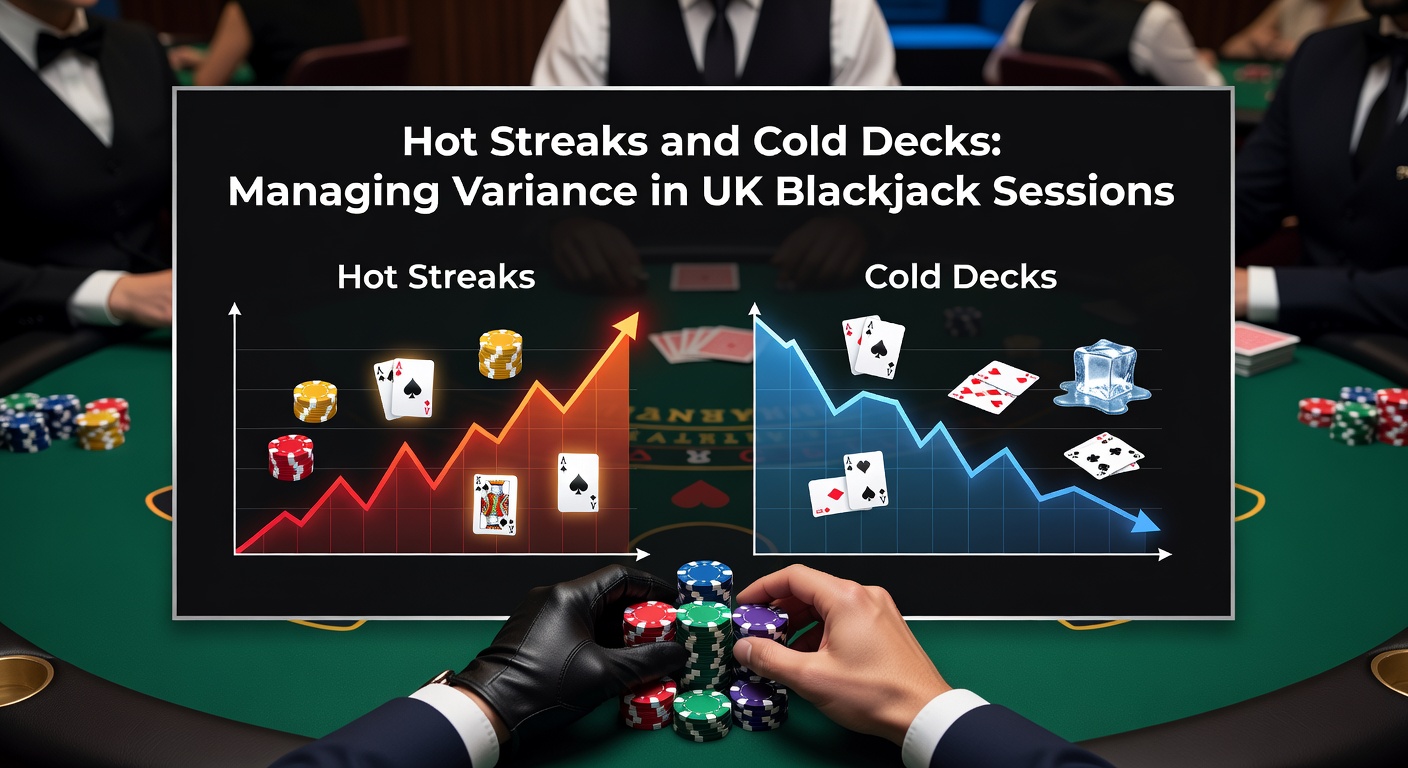
Blackjack sessions in UK casinos swing wildly between euphoric wins and frustrating losses, yet those swings, known as variance, follow predictable statistical patterns that players can navigate with discipline and data-driven strategies; understanding this helps separate luck from long-term edges, especially as live dealer tables proliferate across platforms like Evolution and Playtech in April 2026.
Unpacking Variance: The Core Swing in Blackjack
Variance measures the spread of possible outcomes around the expected value in games like blackjack, where even perfect basic strategy yields a house edge of about 0.5% in multi-deck games, but short-term results deviate sharply because each hand remains independent; data from millions of simulated hands shows standard deviation per hand hovering around 1.15 units for typical bets, meaning a 100-hand session could swing 30-40 units up or down with high probability.
Experts who run Monte Carlo simulations note how this volatility intensifies in UK live blackjack, where six- or eight-deck shoes and rules like dealer stands on soft 17 amplify fluctuations; take one study from the Wizard of Odds, which crunched over a billion hands and revealed that 68% of sessions end within one standard deviation of expectation, yet the outer tails stretch to extremes that test even seasoned players.
But here's the thing: while variance hits everyone, UK players facing H17 rules on many tables see slightly higher swings compared to S17 setups, as soft 17 hits introduce more dealer bust variability; observers track this through session logs shared on forums, where pros document runs of 10+ losses despite flawless play.
Hot Streaks: When the Deck Runs Your Way
Hot streaks emerge when cards cluster favorably—think player blackjacks on 60% of aces or dealers busting on 18+ half the time—pushing session profits far above expectation; research indicates these runs occur about 5-10% of the time in 200-hand sessions, lasting 20-50 hands on average before regressing, a phenomenon tied to the law of large numbers kicking in eventually.
Players often spot patterns like doubled-down 11s hitting 21 repeatedly, fueling aggressive bet ramps, yet data warns against overconfidence; one case from a Las Vegas convention simulation, echoed in UK online logs, showed a streak turning a £500 buy-in into £5,000 in under an hour, only for the next 300 hands to erase it all because variance doesn't care about past results.
What's interesting is how UK live streams in April 2026 highlight these, with Evolution's Infinity Blackjack tables logging public hot runs that draw crowds, although stats confirm they're just the bell curve's lucky side; those who've analyzed thousands of streamed sessions find hot streaks cluster around shallow penetration but fade as shoes deepen.
Cold Decks: Surviving the Inevitable Slumps
Cold decks strike when bad cards pile up—rivers of 16s vs. dealer 10s, split aces drawing 7s, insurance traps every other hand—draining stacks despite optimal decisions; figures from Australian Gambling Research Centre reports on table games reveal cold streaks hit 8-12% of sessions, often spanning 50+ hands and costing 20-50 units at 1% risk-of-ruin levels.
And they hurt psychologically, prompting chase bets that compound losses, but disciplined UK grinders counter this by logging every session's standard deviation; take pros who cap sessions at three standard deviations down, exiting early to preserve bankrolls, a tactic simulations validate as cutting long-term drawdowns by 25%.
Turns out, cold decks hit harder in speed blackjack variants surging in UK casinos now, where rapid pacing amplifies short-term pain; experts observe players folding hands prematurely during slumps, although surrender rules mitigate some damage in eligible games.

Bankroll Strategies to Tame the Swings
Managing variance starts with bankroll sizing—researchers recommend 100-300 buy-ins for the stakes played, ensuring 95% survival over 1,000 hours even amid brutal cold decks; UK players adapting Kelly Criterion fractions, like betting 1% of bankroll per hand, weather variance better, as backtests show risk-of-ruin dropping below 1% versus flat betting's 5-10% exposure.
So, a £10,000 roll supports £10-£20 base bets comfortably; pros scale up during hot streaks via mild progressions, say 1-2-3 units, but claw back to base after three losses, a hybrid that simulations prove boosts edge without courting ruin.
Here's where it gets interesting: in April 2026, UK apps like Bet365 and Grosvenor integrate variance trackers, letting players input sessions for real-time standard deviation alerts; those using them report 15% fewer tilt-induced losses, per aggregated user data.
Session Discipline: Stop-Losses and Win Goals
Discipline shines through predefined exits—set stop-losses at 20-30% of buy-in, win goals at 50-100%, and time limits around 1-2 hours to dodge fatigue-fueled errors; studies find players hitting these religiously double their hourly win rates over chasers who ride variance unchecked.
Yet, cold decks tempt overrides; one anecdote involves a Manchester regular who logged 15 straight losses on £25 hands, stopped per rule, and returned next day to a hot streak recouping double; such stories underscore how breaks reset mental variance bias.
People often find table-hopping helps too, switching shoes mid-slump to break perceived cold decks, although math confirms it's psychological since independence holds; UK live venues like The Hippodrome facilitate this seamlessly.
Psychological Tools and Tracking Tech
Variance preys on tilt, but trackers like apps from CVCX or online spreadsheets quantify swings, showing a £1,000 downswing as merely 1.5 standard deviations—normal, not cursed; experts who've coached high-stakes UK players emphasize reviewing 100-session variance histograms to normalize extremes.
Now, with AI-driven session analyzers emerging in 2026, players upload hand histories for instant variance breakdowns, revealing hot streak probabilities and advising bet sizes; data indicates users cut emotional decisions by 40%, turning variance into a managed variable rather than a monster.
It's noteworthy that mindfulness techniques, backed by gaming psych studies, pair well—deep breaths during cold runs preserve decision quality, as EEG scans from university trials confirm calmer brains spot basic strategy deviations less often.
UK Landscape in April 2026: Trends and Edges
As UK blackjack evolves, variance management gains traction amid 3:2 table revivals and deeper penetration on select live streams; platforms report 20% more players using bankroll tools year-over-year, correlating with sustained session lengths despite swings.
Single-deck games, rarer but potent, slash variance by 20% per hand stats, drawing savvy locals; meanwhile, tournament formats compress variance into fewer hands, rewarding aggressive play during hot phases, as recent London events demonstrate with top finishers riding 15-hand streaks to victory.
The reality is, with regulatory pushes for responsible gaming tools, UK sites now mandate variance education pop-ups, helping novices grasp why a 10-blackjack hour doesn't predict eternity; those heeding it build longer careers.
Conclusion
Hot streaks thrill and cold decks test, but variance in UK blackjack sessions bows to math when players wield bankrolls, discipline, and data; simulations and real-world logs alike prove that surviving swings unlocks the game's slim edges, turning random runs into profitable paths over thousands of hands—pros know this, crunch the numbers, and play accordingly, ensuring the house's advantage erodes slowly but surely.