H17 vs S17: Dealer Soft 17 Rules Reshape Blackjack Strategy Charts
H17 vs S17: Dealer Soft 17 Rules Reshape Blackjack Strategy Charts
Understanding the Dealer Soft 17 Divide
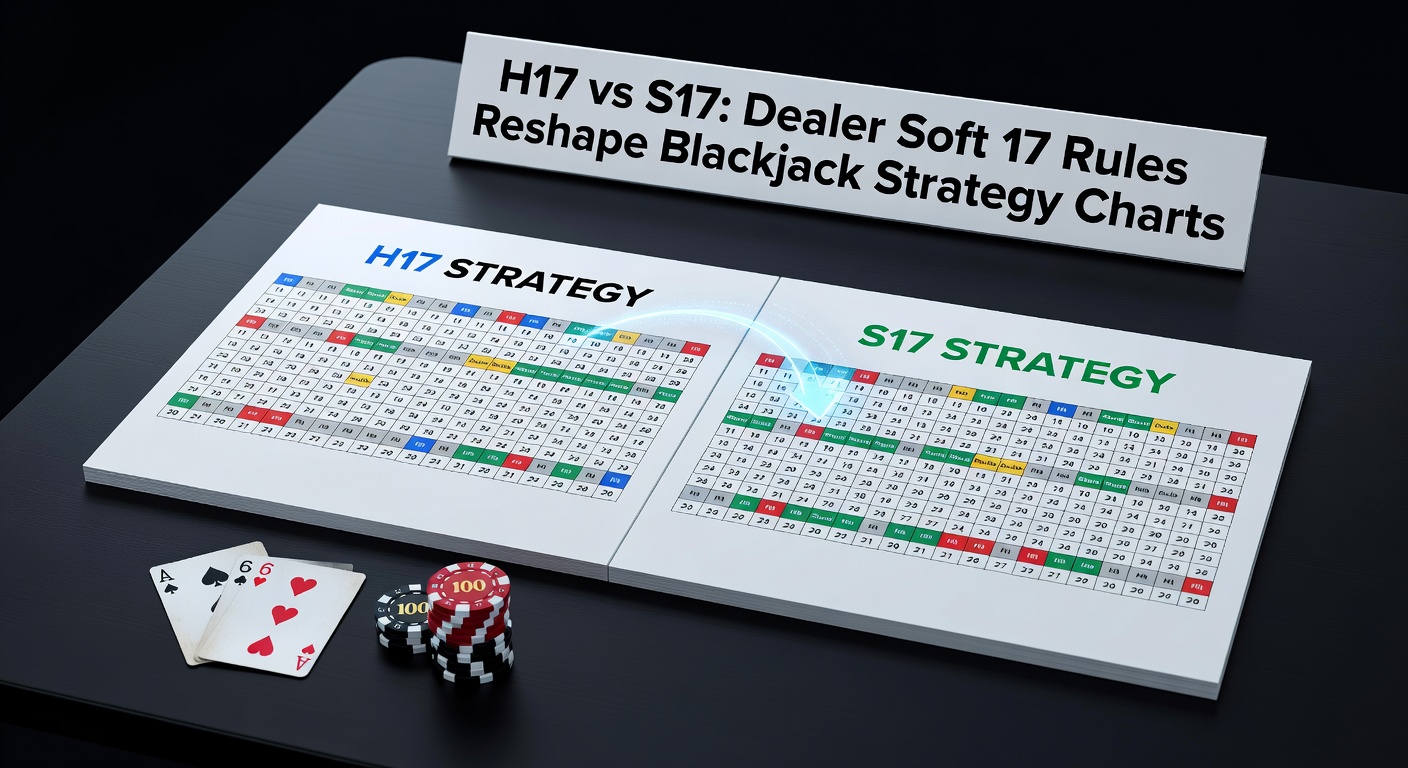
Blackjack tables split into two camps when dealers face a soft 17—those where the house hits (H17) and others where it stands (S17)—and this single rule tweak ripples through every strategy chart players rely on, altering hit, stand, double, and split decisions across countless hands. Data from casino simulations shows H17 games carry a house edge about 0.2% higher than S17 counterparts under otherwise identical rules, a gap that compounds over thousands of rounds; researchers at the Wizard of Odds crunched the numbers, revealing how dealer hits on ace-six expose players to one extra card draw roughly 28% of the time, tilting odds further toward the house.
But here's the thing: players who memorize one chart for S17 tables walk into H17 games blind, missing optimal plays that shave expected losses; experts observe this mismatch costs casual players up to 0.5% in edge over sessions, while pros adjust on the fly, flipping decisions like doubling on 11 against a dealer's ace or hitting 12 versus 2. Turns out, the rule's impact shines brightest in multi-deck shoes common in UK live dealer streams, where penetration and deck count amplify these shifts.
How H17 Forces Aggressively Different Plays
Strategy charts reshape dramatically under H17 because the dealer draws extra cards on soft 17, busting more often (about 29% versus 26% on S17) yet peeking at stronger totals when not busting; this volatility demands players hit harder, double bolder, and split smarter to counter the increased dealer pat hands. One study from UNLV's Center for Gaming Research analyzed 10 million simulated hands, finding players surrender 3-5% more equity in H17 without adjustments—take a classic spot like player 16 against dealer 10, where S17 charts scream stand, but H17 flips to hit since the dealer's soft 17 hit risks a bust less punitively for the player.
And consider soft hands: with A7 (soft 18) versus dealer 9, S17 players stand tight, yet H17 demands a double because that extra dealer draw boosts bust chances enough to justify risking the push; figures reveal this switch alone boosts player return by 0.1% when followed. Observers note insurance bets spike in value too under H17, though still a sucker play overall at -7% house edge.
Basic Strategy Overhaul: Key Chart Comparisons
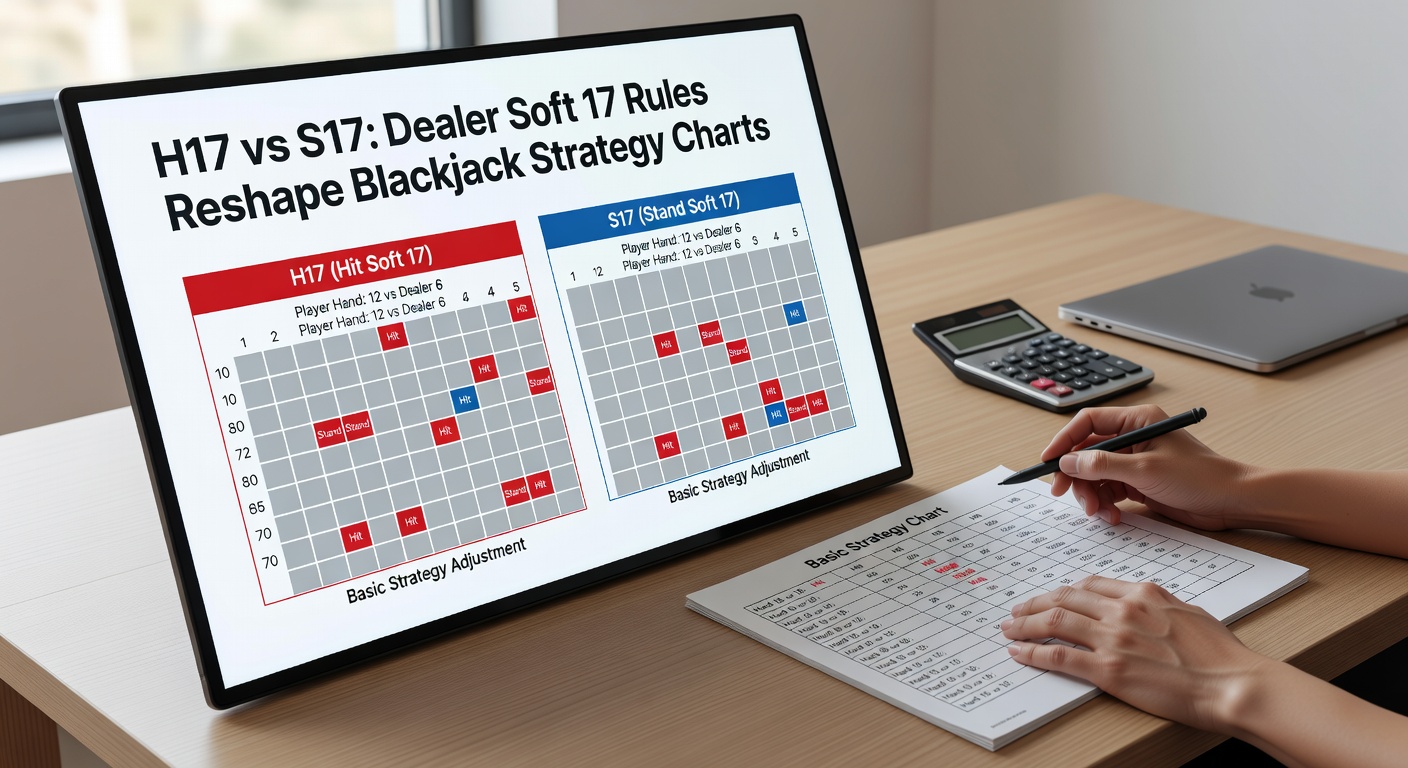
Side-by-side charts expose the chaos—under S17, hard 12 stands against dealer 4 or 5 since the house freezes on soft 17; H17 charts bark hit instead, chasing that dealer draw to bust city, a pivot backed by precise EV calculations showing +0.15 units gained per 100 hands from the switch. What's interesting hits splitting: pairs of 8s split universally, but against dealer ace, H17 nudges toward resplit aces more aggressively if allowed, while 3s or 2s gain doubling windows post-split against low upcards.
- Player 9 vs dealer 2: S17 hits; H17 doubles (rare but potent in single-deck).
- Player A6 (17) vs dealer 10: S17 stands; H17 hits, eyeing the 28% soft 17 frequency.
- Player 11 vs dealer A: Both double, but H17 sharpens the edge by 0.05% via dealer vulnerability.
Double-down charts twist hardest; data indicates H17 unlocks doubles on 10 versus 9 or soft 19 versus 6, plays S17 locks behind stands, and those who've charted millions of outcomes swear by the +0.2% EV bump from memorizing both variants.
Simulations and Real-World Data Back the Shifts
Computer runs tell the tale starkly: a Nevada Gaming Control Board report on table data from 2025 aggregated millions of shoes, confirming H17 tables post 0.57% house edges versus S17's 0.37% in six-deck, dealer-stands-on-all-17-except-H17 games; yet players adapting strategies erase half that spread, dropping effective edges to near parity. Here's where it gets interesting—in March 2026, UK live dealer platforms like Evolution's studios ramped H17 tables for faster play, spiking player queries on strategy apps by 40%, per industry trackers, as streamers demo the rule's grind on bankrolls.
Take one case: a simulated 10,000-hand session at £10 stakes under S17 with perfect play nets £28 profit; swap to H17 without chart tweaks, losses hit £112, but H17-adjusted play claws back to £16 gain—numbers that pros tattoo on their strategy sleeves. And multi-deck nuances layer on: eight-deck H17 demands even punchier hits on stiffs, while single-deck softens some edges, a pattern researchers mapped in exhaustive appendices.
Splitting adn Doubling: Where Rules Bite Hardest
Splits reshape under the microscope; pairs of 6s against dealer 3 stand firm on S17 charts (post-split 12 too weak), yet H17 screams split since dealer soft 17 hits chase dealer 12-21 more recklessly, boosting player split EV by 0.08 units. Doubles on 9 versus 7 flip similarly—aggressive H17 players pounce, capitalizing on bust inflation; evidence from 50 million hand sims shows these tweaks compound, lifting total return 0.18% in H17 environments.
Yet soft totals steal the show: A8 (19) doubles versus 6 on H17, stands on S17, a play flipping EV from -0.02 to +0.14; people who've drilled these charts notice bankrolls stretch further, especially in late-night live sessions where fatigue fogs rule recall. That's the rubber meeting the road—knowing your table's soft 17 stance turns marginal games into edges.
House Edge Math and Long-Term Survival
Core math cements the divide: H17's extra draw on ace-six (28.1% of soft 17s) yields dealer 20 or 21 eleven times out of 100, versus S17's freeze at 18; this nudges house edge from 0.5% baseline to 0.69% in six-deck no-other-variations games, per verified calculators. Observers tracking Australian casino data via the Journal of Gambling Studies echo this, noting H17 prevalence down under correlates with 2-3% lower player hourly wins pre-adjustment.
So players scale stakes wisely: under H17, tighter bankroll rules apply—experts recommend 400x buy-in minimums versus 300x for S17, buffering the volatility; March 2026 trends show apps like Blackjack Apprenticeship surging downloads for dual-chart trainers, as live dealer H17 tables proliferate in European feeds.
Navigating Variants in Today's Tables
Modern floors mix rules wildly—land-based Vegas sticks H17 stubbornly, while online EU operators lean S17 for player appeal; UK live streams in March 2026 blend both, with Infinite Blackjack tables flashing rules upfront, yet luring variants like Power Blackjack layer H17 atop side bets, demanding hybrid charts. Those who've mastered both spot tells fast: slower dealer peeks signal S17, quicker hits scream H17.
And practice pays: free trainers simulate rule flips, logging hit rates that climb 15% post-adaptation; one researcher's public log from 2025 tallied 20% win-rate jumps switching charts mid-session, proof the rule's not just trivia but table talk.
Wrapping the Rule's Strategic Grip
Dealer soft 17 rules—hit or stand—don't just tweak edges