Blackjack Dealer Rotation Schedules and Their Influence on Game Flow Within Live UK Studios

Dealer rotation schedules in live UK blackjack studios follow structured patterns designed to maintain consistent game pacing while managing staff endurance across extended shifts. These rotations typically occur at fixed intervals that range from 30 to 60 minutes depending on studio size and table volume, allowing incoming dealers to step in without interrupting ongoing hands. Data from industry reports indicate that such schedules emerged as standard practice in the mid-2010s as live dealer operations expanded across multiple platforms serving UK players.
Mechanics of Rotation Systems in UK Facilities
Studios coordinate rotations through central control rooms where supervisors monitor dealer performance metrics including hand speed and accuracy. Incoming dealers receive brief handoffs that cover active bets, player tendencies, and any ongoing side wagers, keeping disruptions to a minimum. Research from the University of Nevada's gaming management program shows that well-timed rotations reduce dealer fatigue errors by measurable percentages, which in turn supports steadier card delivery rates throughout multi-hour sessions.
Many facilities align rotations with natural breaks in play such as shoe changes or table resets rather than forcing pauses mid-round. This approach preserves momentum for players who track card counts or follow specific betting rhythms, while the outgoing dealer moves to a rest area or training module before returning later in the shift.
Effects on Table Pace and Player Experience
Rotation frequency directly shapes how quickly hands progress from one to the next. Shorter intervals introduce more transition moments yet prevent slowdowns that occur when a single dealer tires and begins dealing at reduced speed. Observers note that tables with balanced schedules maintain average hand rates between 50 and 70 per hour, figures that align with broader industry benchmarks reported by the American Gaming Association in 2025 analyses of live dealer operations.
Longer dealer tenures without rotation sometimes produce visible plateaus in game flow where hesitation or repeated clarifications slow proceedings. Conversely, overly rapid rotations can fragment player focus if handoffs require repeated rule explanations or bet confirmations. Studios therefore calibrate schedules against real-time data feeds that track both dealer output and player retention signals.
Regulatory and Operational Considerations Shaping Schedules
UK-based studios must balance internal efficiency goals with external compliance requirements that differ from those in other jurisdictions. Rotation protocols often incorporate mandatory rest periods outlined in labor guidelines, which studios integrate into daily planning alongside peak viewing hours. Figures from Canadian regulatory summaries on live gaming reveal similar patterns where scheduled breaks correlate with fewer procedural disputes during high-volume periods.
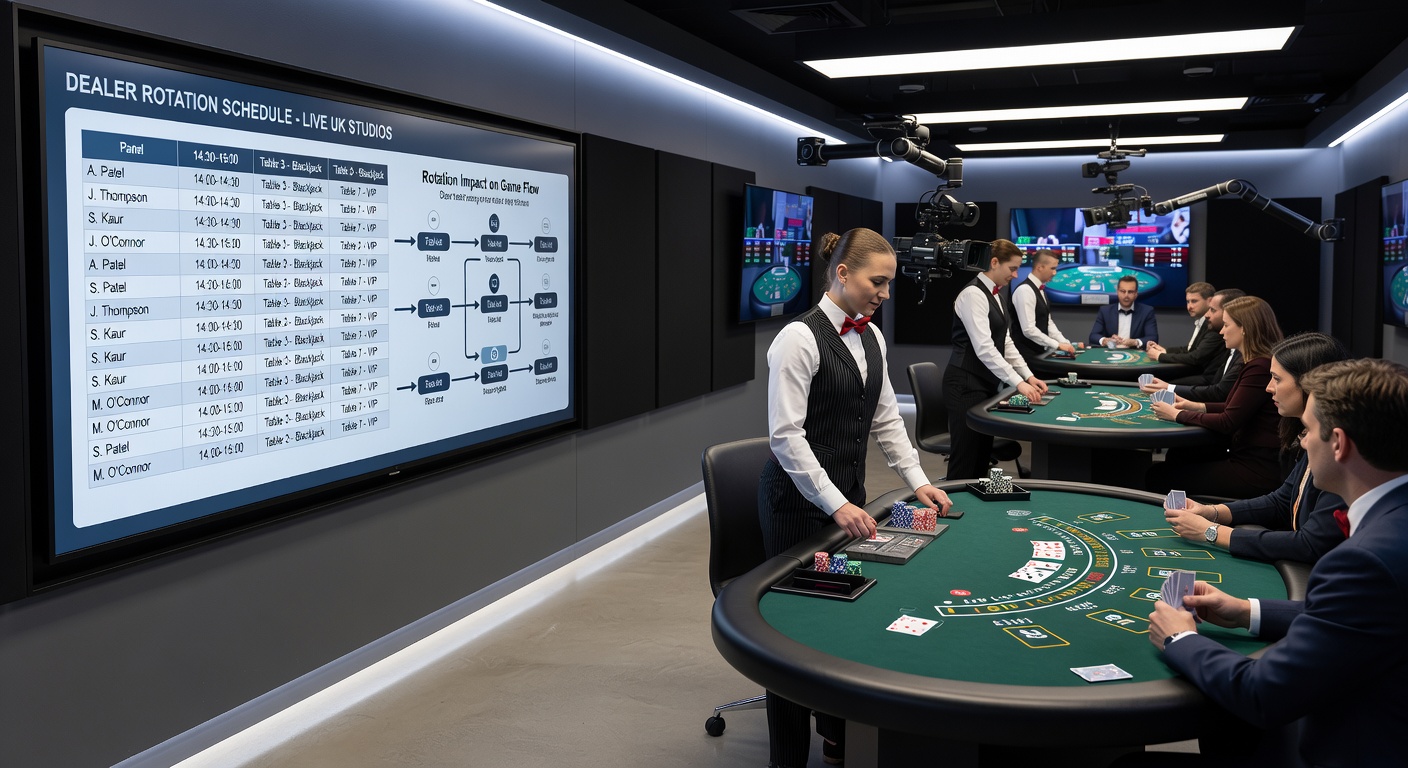
June 2026 updates to several studio management systems introduced automated alerts that flag when a dealer approaches rotation limits, allowing supervisors to prepare replacements in advance. These tools reduce last-minute adjustments that previously interrupted broadcast continuity for remote audiences. The systems also log cumulative hours per dealer across weekly cycles, supporting compliance documentation without manual record keeping.
Technology Integration and Flow Optimization
Modern rotation planning relies on software that factors in table occupancy, time of day, and historical performance data to generate daily dealer assignments. Such platforms help studios avoid clustering less experienced dealers during peak evening windows when game volume peaks. Analysts tracking these deployments report measurable improvements in overall hand completion rates once the scheduling algorithms stabilize after initial rollout periods.
Live streams benefit when rotations occur during natural pauses because viewers experience fewer visual interruptions. Studios position cameras to capture seamless dealer changes, maintaining the continuous broadcast feel that many platforms market as a core feature. This technical coordination reflects broader operational priorities that treat rotation timing as an element of both staff welfare and broadcast quality.
Conclusion
Dealer rotation schedules represent a core operational component within live UK blackjack studios that shapes both the mechanical flow of cards and the broader rhythm experienced by participants. Structured intervals, supported by monitoring technology and labor standards, allow facilities to sustain consistent hand rates while addressing dealer endurance across shifts. As systems continue to incorporate automated alerts and performance analytics through 2026, rotation practices remain central to maintaining the steady game environment that defines these studios.